
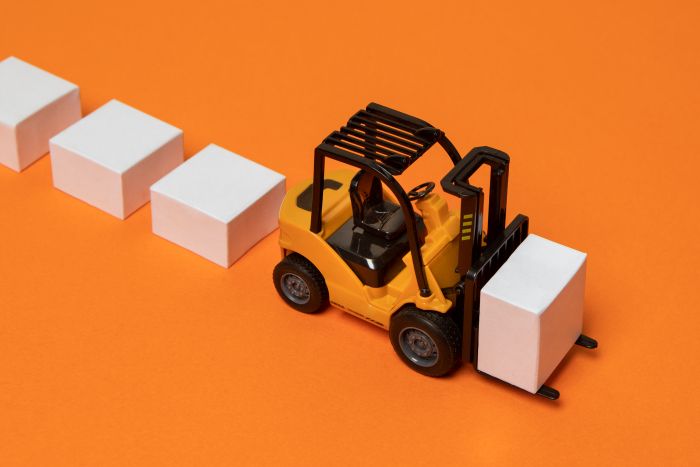
In many workplaces, delays do not begin with major failures. They begin with routine movement. A pallet needs to be shifted from one area to another, but the route is narrow, the aisle is blocked, or the storage point was never designed for constant forklift traffic. What should be a quick task is to turn into a pause, then a workaround, then a longer delay that affects the rest of the shift.
Material handling problems often hide inside ordinary routines. Teams become used to waiting for equipment, clearing paths, or rearranging nearby stock just to reach one load. Because these steps are familiar, they are rarely treated as a process problem. Yet repeated small delays can shape the rhythm of an entire operation.
This matters in facilities where space is limited, where goods are staged vertically, or where crane access is easier than floor access. In those settings, the issue is not simply whether a load can be moved. The real issue is how much disruption that movement causes.
The cost of forced detours
A forklift is effective when the layout supports it. Wide lanes, stable traffic patterns, and easy turning space allow movement to happen quickly. But not every site operates under those conditions. Temporary storage zones, crowded production areas, outdoor yards, and older facilities often create obstacles that make forklift movement less efficient than it appears on paper.
When equipment must take indirect routes, movement time increases. When operators need support from other staff to clear space, labor time rises as well. When a single vehicle is tied up waiting for access, the delay can spread to the next job. None of these issues look dramatic in isolation, but together they reduce throughput.
The practical result is simple. A business may think it has a lifting problem, when it actually has an access problem.
Why access shapes productivity
Access is one of the least discussed parts of handling efficiency. It is easy to focus on capacity, speed, and labor cost while overlooking the physical reality of the workspace. If a load sits in an area that cannot be reached without moving other items first, handling becomes a sequence of interruptions instead of a smooth action.
This is why some operations benefit from overhead lifting methods in specific situations. Where crane support already exists, moving palletized goods from above can remove the need to create a ground path every time. That does not replace all conventional methods, but it changes the conditions for certain tasks.
The value of this shift is not only in lifting. It is reducing the number of extra actions that happen before lifting even begins.
Less congestion, fewer interruptions
Work areas become less predictable when too many tasks compete for the same floor space. Vehicles cross paths with people. Staged goods narrow travel routes. Short-term storage becomes semi-permanent. A simple pickup can disrupt packing, loading, inspection, or assembly.
This is where a lightweight pallet lifter can make sense within a broader handling strategy. In areas where palletized loads need to be raised without sending more traffic through busy lanes, overhead access may reduce friction. The advantage is not novelty. It is about limiting congestion in parts of the facility that already carry too much movement.
Reducing congestion helps more than speed. It also improves coordination. Teams can work with fewer pauses, fewer last-minute adjustments, and less dependence on one overused machine.
Layout problems usually grow slowly
Most handling inefficiencies are not created in one day. They build gradually as the workplace changes. A staging area expands. Inventory patterns shift. New equipment has arrived. Temporary work zones become permanent. Over time, a layout that once supported smooth movement becomes a source of delay.
Because the change is gradual, the response is often gradual too. Staff compensate. They memorize the awkward routes. They work around pinch points. They accept waiting time as normal. But adaptation is not the same as efficiency.
Reviewing handling flow requires more than checking whether loads are moved safely. It also requires asking where movement becomes unnecessarily complicated. If one task regularly depends on clearing space, pausing nearby work, or waiting for the right vehicle to become available, then the process deserves attention.
The business case is often operational, not mechanical
When organizations assess handling equipment, they often compare lifting tools with strength, size, or availability. Those factors matter, but they do not fully explain performance in daily use. Operational fit matters just as much.
A method that works well in open spaces may create delays in restricted spaces. A vehicle that moves quickly in one zone may be inefficient in another. The best choice depends on how well the task fits the environment, not just on what the equipment can do under ideal conditions.
This is why handling decisions should be tied to workflow. Businesses that study where delays occur often find that the issue is not moving heavy loads in general. It is moving ordinary loads through the wrong path, at the wrong time, with the wrong access method.
Smarter movement starts with fewer obstacles
A productive workday depends on more than effort. It depends on movement that does not keep colliding with the limits of the workspace. When floor traffic becomes too dependent on detours and waiting, even simple jobs begin to consume more time than they should.
Improving that situation does not always require larger systems or major redesign. Sometimes it begins with recognizing that access is part of efficiency. Once that becomes clear, businesses can make better decisions about how palletized goods should move, where congestion starts, and which tasks need a different lifting approach.
In many operations, the real slowdown is not the load. It is the path.