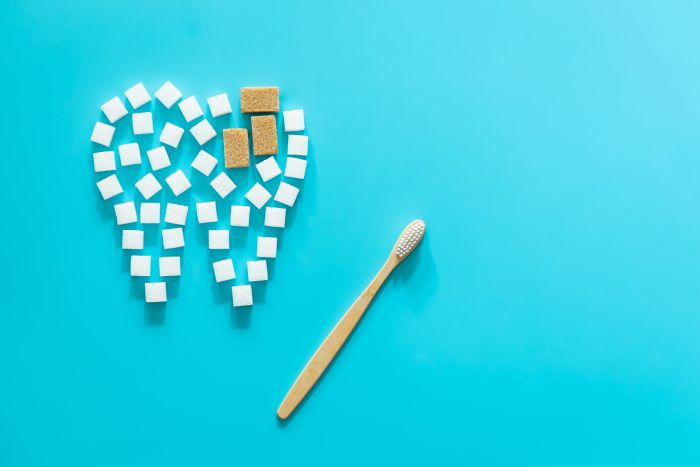
Quick answer: Sugar feeds mouth bacteria that produce acid, and that acid weakens tooth enamel for a while after every sweet. How often you eat sweets matters more than how much. Eat mithai with meals instead of all day, rinse with water afterwards, brush twice daily with fluoride toothpaste and floss at night.
Kaju katli, gulab jamun, ladoos and chikki: festive weeks bring sweets at every visit. You don’t have to skip them. Knowing how sugar affects teeth helps you enjoy them with less damage.
How does sugar damage teeth?
Bacteria in dental plaque break down sugar and produce acid. That acid pulls minerals out of enamel. Saliva slowly neutralises the acid and repairs early damage, but if you snack on sweets again and again, your teeth never get time to recover. Over months, this can lead to cavities.
Which Diwali sweets are hardest on teeth?
Sticky and slow-dissolving sweets stay on teeth longest.
| Type of sweet | Examples | Risk to teeth | Why |
|---|---|---|---|
| Sticky / chewy | Chikki, toffee, soan papdi | High | Sticks in grooves and between teeth |
| Syrup-soaked | Gulab jamun, jalebi, rasgulla | High | Sugar coats every surface |
| Hard candy | Boiled sweets, mishri | High | Dissolves slowly; can also crack teeth |
| Milk-based | Barfi, peda, kaju katli | Medium | Still sugary, but less sticky |
| Sugary drinks | Cold drinks, sweet lassi | Medium–high | Sipped slowly over time |
| Dry fruits (plain) | Almonds, walnuts | Low | Little sugar; good alternative |
7 simple ways to protect your teeth this festive season
- Eat sweets with meals, not as constant snacks through the day.
- Rinse with plain water after eating mithai to wash off sugar.
- Wait about 30 minutes before brushing if you’ve had something acidic (like cold drinks), so you don’t scrub softened enamel.
- Brush twice a day with fluoride toothpaste for two minutes.
- Floss or use an interdental brush at night to clear sticky bits between teeth.
- Chew sugar-free gum after sweets; it increases saliva, which helps neutralise acid.
- Swap some sweets for plain dry fruits, fruit or roasted makhana.
What are the signs of a cavity?
Watch for sensitivity to sweet, hot or cold food, a dull ache while chewing, a visible dark spot or hole, or food repeatedly getting stuck in one place. Early cavities are quick and inexpensive to fix, so don’t wait for pain.
Are children more at risk?
Yes. Children often snack on sweets throughout the day, and milk teeth have thinner enamel. Keep sweets to mealtimes, supervise brushing until about age 7–8, and use the right amount of fluoride toothpaste for their age.
Key takeaways
- Frequency of sugar matters more than quantity.
- Sticky and syrupy sweets cause the most harm.
- Rinse with water and brush with fluoride toothpaste.
- See a dentist early if you notice sensitivity or dark spots.
FAQs
Is it better to eat all my sweets at once?
From a teeth point of view, yes: one sweet session with a meal causes fewer acid attacks than nibbling all day.
Should I brush immediately after eating sweets?
Rinsing with water right away helps. If you also had acidic food or drinks, wait about 30 minutes before brushing.
Are sugar-free sweets safe for teeth?
They are generally kinder to teeth, but some are still sticky or acidic. Rinse after eating them too.
How often should I see a dentist?
A check-up every six months is a common recommendation. Your dentist may suggest a different interval based on your teeth.
[Related: Simple Tips to Protect Your Teeth and Gums Every Day] · [Related: Braces vs Clear Aligners in India]
Disclaimer: This article is general health information, not dental or medical advice. See a dentist for pain, swelling or sensitivity.